Traveling the Balkans: 2 Weeks on $600 (Real Costs)
I once paid €150 for an “authentic” Venetian gondola ride that felt like a theme park queue. That was my last tourist trap.
Traveling the Balkans for two weeks cost me €593.41 instead. Flights not included, every euro tracked.
You know the feeling. Every “must-do” list leaves you ripped off, your bank account looks sad, and your travel itch is still screaming. You want real culture, real food and real quiet, without selling a kidney.
Below is the full breakdown: what I spent on beds, food and buses, the five-stop route through Bosnia, Montenegro and Albania, and what went wrong. No influencer gloss. Just one traveler’s receipts, and the lessons that stuck.
Table of Contents
Is Traveling the Balkans for 2 Weeks on $600 Really Possible?
Yes, traveling the Balkans for two weeks on a tight budget works: I spent €593.41 over 14 days, flights excluded. Every euro got tracked.
It started with a €150 “authentic” gondola ride in Venice that felt exactly like a theme-park queue. I swore off tourist traps, dropped the “must-do” lists and went rogue. No secret influencer hack here, just a real trip built around real culture, real food and real quiet.
Here is exactly where every euro went, line by line.
The Real Cost of Traveling the Balkans: My €593.41 Breakdown
I logged every expense on the road, so nothing here is a guess. The total landed at €593.41 across five categories: beds, food, transport, activities and a small buffer. The next subsections break down each one, starting with the daily averages.
Daily Averages: €8.50 a Night and €12.80 a Day
Two lines carry most of this budget. Beds averaged €8.50 a night, which added up to €120 across all 14 nights. I mixed budget hostels with guesthouses and, in smaller towns, mostly booked private rooms.
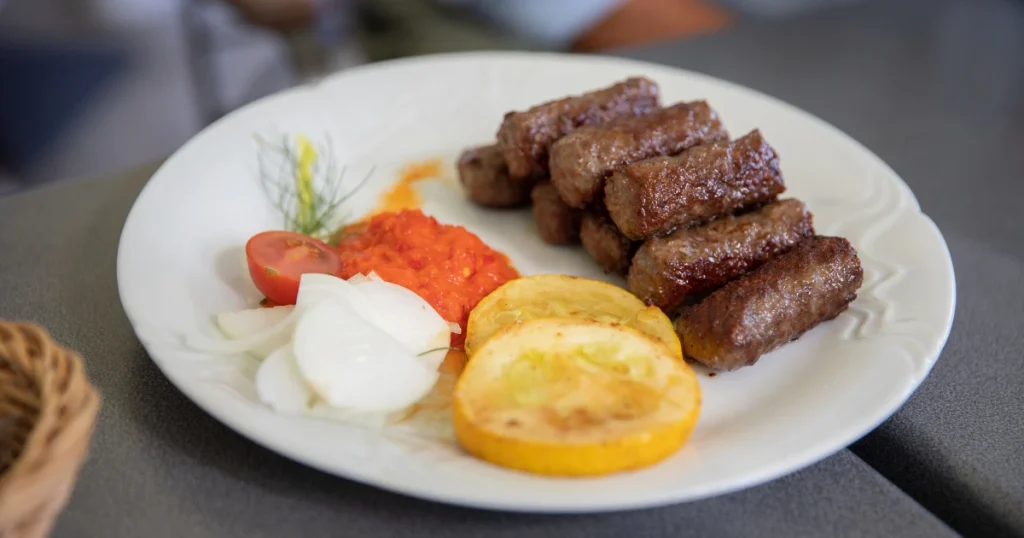
Food averaged €12.80 a day, roughly €180 in total. I ate at local eateries, bakeries and markets, and the menu barely changed:
- Cevapi
- Burek
- Coffee
Both figures come straight from my expense log. Put them together and a bed plus food cost about €21.30 a day, a fraction of what one gondola ride cost me. Getting between towns was a separate line, and it came in at a round €100.
What the Budget Doesn’t Include: Flights
Beds, food and buses make up most of the total, but one big cost sits outside it entirely. Flights are not included, because prices swing wildly depending on where you start. My round trip from Berlin cost €75 on a budget airline. Treat the €593.41 as the on-the-ground cost only, and price your own flight separately.
The €123.41 Miscellaneous/Buffer line covered the small stuff every trip quietly demands:
- SIM card (balkans esim)
- Laundry
- Emergency snacks
- Small souvenirs
That buffer kept small expenses from denting the rest of the budget. With the money side settled, the route itself is next.
My 14-Day Balkans Itinerary: 5 Stops in 3 Countries
My balkans itinerary covered three countries in 14 days: Bosnia & Herzegovina, Montenegro and Albania.
- Sarajevo: 3 days
- Mostar: 2 days
- Perast & Risan: 3 days
- Shkoder: 2 days
- Tirana: 4 days
Each stop earned its place, starting with Sarajevo.
Sarajevo, Bosnia & Herzegovina (3 Days)
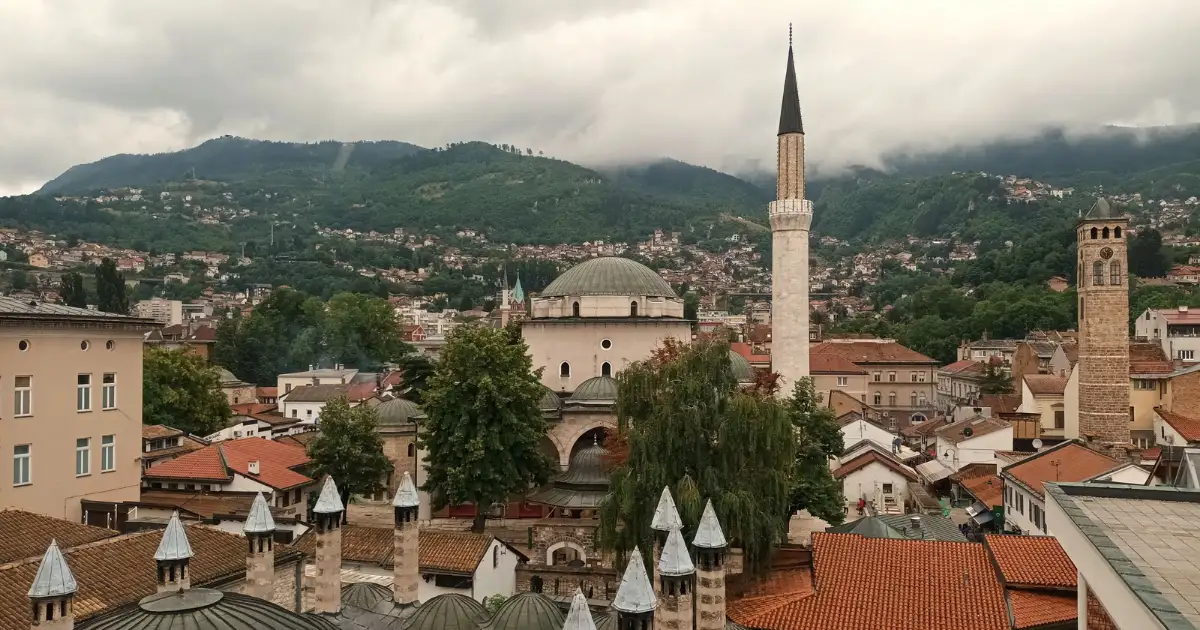
Sarajevo set the tone for the whole trip. The city carries deep history, and the free walking tour was genuinely moving and informative. It cost nothing.
The food hit just as hard. A huge plate of cevapi and a drink cost me €5. Incredible, filling and cheap.
- History: deep, and worth slowing down for
- Walking tour: free, moving, informative
- Dinner: cevapi plus a drink for €5
Nothing about it felt like a tourist trap. Three days gave me time to take in both the history and the food without rushing either. Mostar came next, with a famous bridge and plenty more behind it.
Mostar, Bosnia & Herzegovina (2 Days)
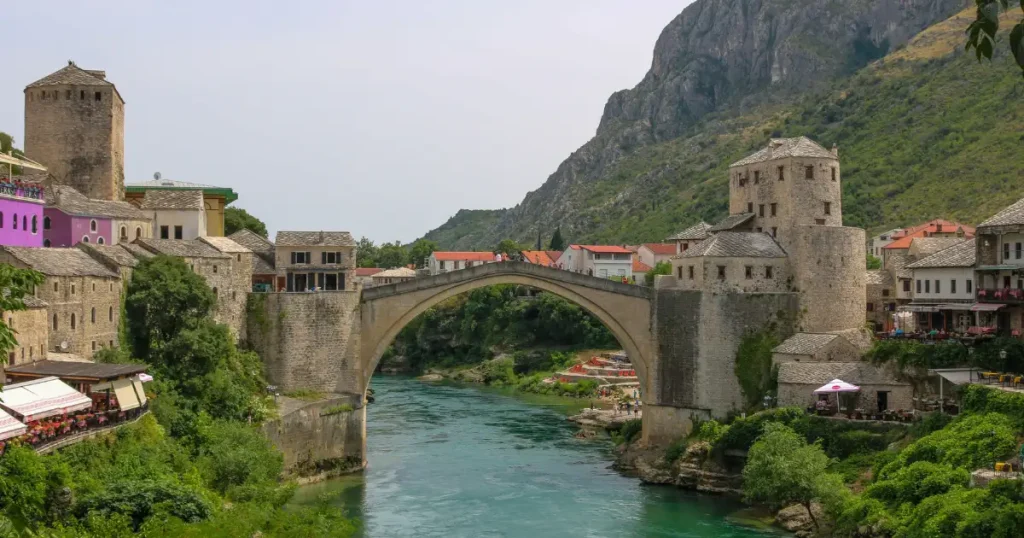
The iconic bridge is why most people come to Mostar, and it earns the attention. Locals still jump from it, which makes for a real spectacle rather than a staged show.
Don’t stop there. Explore beyond the bridge. The Kujundžiluk, the old bazaar, is charming, and it gives you a slower, more grounded side of town than the postcard view.
- The bridge: iconic, and locals still jump from it
- Kujundžiluk (old bazaar): charming, worth a slow wander
Two days gave me time for both the famous view and the streets around it. Next came Montenegro, and a deliberate choice to skip the crowds on Kotor Bay.
Perast & Risan on Kotor Bay, Montenegro (3 Days)
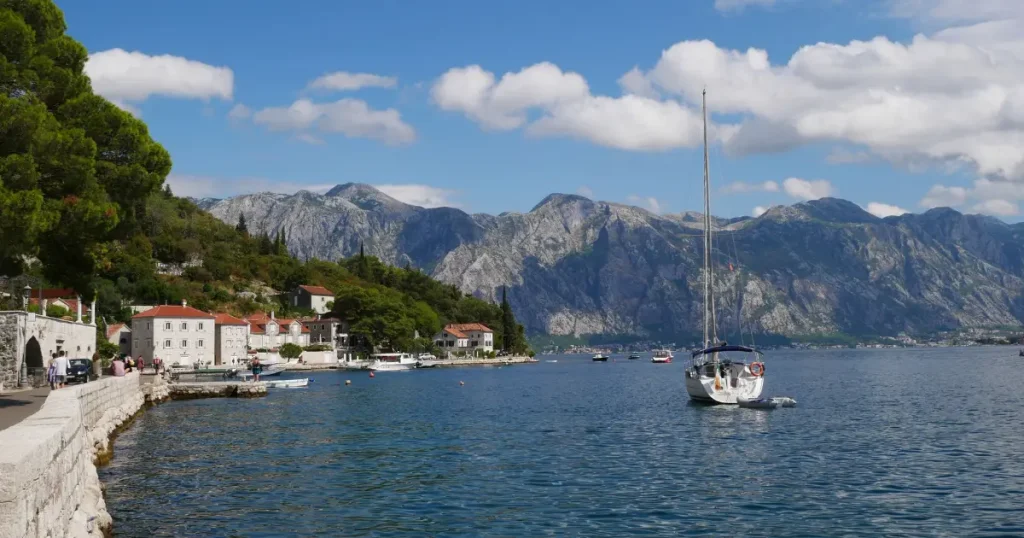
Kotor Bay was the one place where I changed the usual plan. I skipped packed Kotor town and based myself in quieter Perast instead. Much calmer.
From there, I used local buses to explore the bay, including Risan. It kept costs low and let me see the area at a slower pace.
- Base: Perast, not Kotor town
- Getting around: local buses
- Result: a much calmer stay
For a budget traveler chasing authenticity, that trade-off was easy. Three days here gave me real quiet, which was exactly what I’d come for. Albania was next, starting with a bike ride in Shkoder.
Shkoder, Albania (2 Days)
Shkoder worked as a great base for exploring northern Albania, and two days was enough to get a feel for it. The best move was simple: rent a bike and cycle out to Rozafa Castle for sunset.
Coffee ran €1-2 a cup, which made it easy to stop whenever the legs needed a break.
- Getting around: rent a bike
- Sunset spot: Rozafa Castle
- Coffee: €1-2
Cheap, slow and scenic. That’s the kind of day I came to the Balkans for. The longest stop on the route was still ahead, in Albania’s capital.
Tirana, Albania (4 Days)
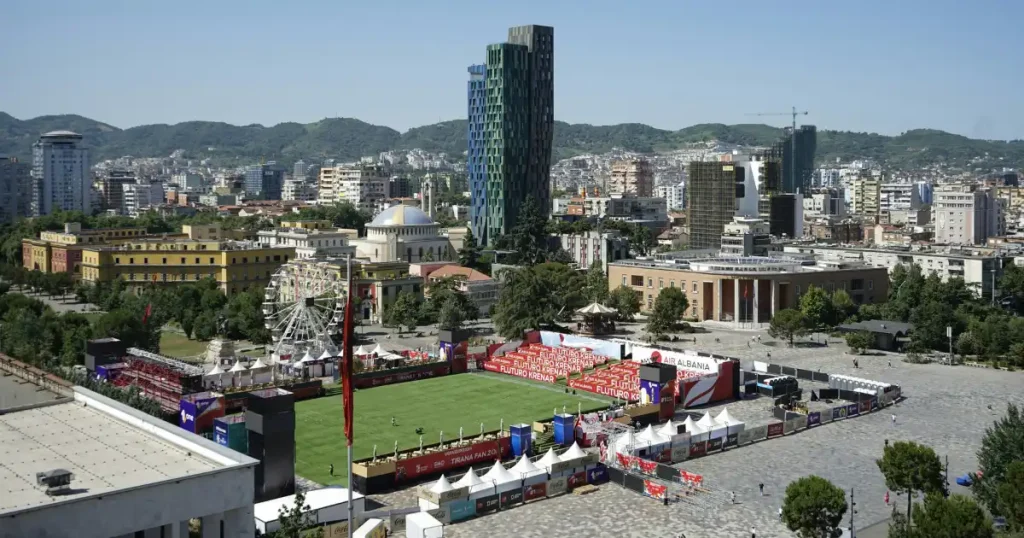
Tirana got the longest stretch of the trip, four days, and it surprised me. The city felt lively and modern, not the rough-edged capital I’d half expected.
Bunk’Art 2 is a must-see. Go there first.
Then do what I did one afternoon: grab an espresso for €1, find a park and just people-watch. No ticket, no itinerary, nothing to tick off.
- Must-see: Bunk’Art 2
- Cheap pause: €1 espresso in a park
- Pace: four days, no rush
Four days gave me room to slow down at the end of the route. That left the question of how I kept the whole trip this cheap.
Best Cities in the Balkans for a Budget Trip (and the Ones I Skipped)
Part of the answer is which cities in the Balkans I picked. I chose all five for authenticity, not hype. My unpopular opinion: skip the crowded coastal cities if you’re on a tight budget and want the real thing. The first skip was Dubrovnik.
“Planning a trip outside the Balkans? Here are the 12 best countries to visit in December by budget.”
Why I Skipped Dubrovnik and Other Hyped Spots
I deliberately avoided the super-hyped spots, Dubrovnik first among them. The reason goes back to that €150 gondola ride in Venice.
That ride taught me what a famous, must-do attraction can feel like: a theme park queue with a high price tag. I wasn’t about to repeat it in the Balkans on a tight budget.
So I built the route around places that felt real instead:
- Skipped: super-hyped spots like Dubrovnik
- Chose instead: Sarajevo, Mostar, Perast & Risan, Shkoder and Tirana
- Goal: culture, food and quiet, without the tourist hustle
Skipping the hype didn’t mean skipping the experience. It meant picking where I spent my time and money, and the next section covers the quietest places on the route.
Looking for the Chillest Balkan Country? Where I Found Real Quiet
I can’t crown one chillest balkan country, because I never ranked them. What I can tell you is where I actually found calm.
In Montenegro, that meant Perast instead of Kotor town. Much quieter. In Albania, it meant a slow day in Shkoder, cycling a rented bike to Rozafa Castle for sunset, and an afternoon in a Tirana park with a €1 espresso and nothing to do but people-watch.
- Perast: calmer than packed Kotor town
- Shkoder: bike ride and sunset at Rozafa Castle
- Tirana: €1 espresso, park bench, no agenda
Real quiet came from where I based myself and how slowly I moved, not from one border. The next section shows how I kept that slow pace so cheap.
How I Avoided Tourist Traps While Traveling the Balkans on a Budget
Four habits kept my costs low while traveling the Balkans: public transport, local eateries, walking and guesthouses. Each one steered me away from the tourist hustle and toward how locals actually get around, eat and sleep. Public transport came first.
Public Transport Is Your Best Friend
Buses did the heavy lifting on this trip. They’re cheap and efficient enough, and they take you through actual towns, not just highways. Between inter-city buses and local trams, all my transport came to €100.
Borders turned out to be the easy part. Crossing between countries was surprisingly easy, which kept the three-country route simple.
- Cost: €100 for the whole trip
- Vehicles: inter-city buses, local trams and buses
- Bonus: you see real towns along the way
The only catch was timing, since schedules behaved more like suggestions, a point I come back to in the Real Talk section. Moving cheaply is one thing. Eating cheaply is where the locals come in.
Eat Where the Locals Eat
The easiest way to eat well on a budget is to follow the locals. Skip anything with a tourist menu and ask for the two shops that matter.
- Buregdžinica: a burek shop
- Ćevabdžinica: a cevapi place
Both serve food that’s fresh, delicious and dirt cheap. They also explain how my food bill stayed at €12.80 a day, built on cevapi, burek and coffee from local eateries, bakeries and markets.
Saying the name out loud, even badly, gets you pointed in the right direction. Eating well was half the savings. The other half cost nothing at all: walking.
Walk Everywhere and Choose Guesthouses Over Hostels
Walking is free, and it’s the best way to find things no list mentions. Wander without a plan and you stumble onto hidden bakeries and interesting street art. No ticket, no tour.
For beds, hostels are fine, but guesthouses are gold. Many are run by families, so you get a glimpse of local life, and they cost about the same.
- Walking: free, and it turns up bakeries and street art
- Hostels: fine for a cheap bed
- Guesthouses: family-run, local, just as affordable
Together with the buses and the burek shops, these habits kept the trip at about €8.50 a night for a bed. Sticking to them paid off in ways I never planned for, like a waterfall that wasn’t on any map.
Unexpected Wins From My Balkans Budget Trip
The best moments of traveling the Balkans were the ones I never planned. Strangers were kind. People went out of their way to help me despite language barriers, and that stayed with me longer than any landmark. Then came the waterfall, which I found by wandering inside a national park. It wasn’t on any map. Just wandering pays off.
Not everything went smoothly, though. The trip had its rough moments too, and I’d rather you hear about them before you book.
Real Talk: What Sucked and What I’d Do Differently
Traveling the Balkans on $600 wasn’t flawless, and I won’t pretend it was. Some things went wrong, and a few small fixes would have made the trip smoother. I’ll start with the buses and the language gap.
Bus Delays and Language Barriers
Bus schedules in the Balkans are more like “suggestions.” Expect delays. Sometimes a bus just won’t show up. Patience is key, and I’ll admit it’s part of the adventure, I guess.
Language was the other snag. English isn’t universal, especially outside the bigger cities. My phone died at one point, and a small phrasebook would have been a godsend.
- Buses: build in slack and stay patient
- Translation: download offline packs before you go
- Backup: carry a small phrasebook for when your phone dies
Both problems are easy to plan around once you know they’re coming. One last lesson involves your wallet, and it’s about small bills.
Rough Edges and Small Bills
Some areas are still rough around the edges. Don’t expect pristine, manicured tourist zones everywhere. I personally loved the grit, but it’s not for everyone, and you should know that before you go.
The other mistake was cash. I wish I’d brought more small bills. Breaking a €50 in a tiny village shop can be a real challenge.
- Expect: grit, not polish
- Pack: plenty of small bills
- Avoid: paying for a snack with a €50 note
None of this changed my verdict, but it would have made a few moments easier. The last practical step is a quick round of answers to the questions people ask most.
FAQ | About Traveling the Balkans on a Budget
How much does traveling the Balkans for two weeks cost?
€593.41 over 14 days, flights excluded.
What is a good balkans itinerary for 14 days?
Sarajevo (3), Mostar (2), Perast & Risan (3), Shkoder (2), Tirana (4).
How much should I budget per day for food and a bed?
About €12.80 for food and €8.50 for a bed.
Is it easy to cross borders between Balkan countries?
Surprisingly easy by bus.
Is English widely spoken?
Not outside bigger cities. Download offline translation packs and carry a small phrasebook.
Which cities in the Balkans should I skip on a tight budget?
Crowded coastal spots like Dubrovnik and Kotor town.
One last step is yours.
Your Turn: Share Your Favorite Lesser-Known Balkan Spots
That’s my route, receipts included, but it’s one traveler’s version of traveling the Balkans. I saw five stops in three countries, so I know I missed things. Tell me what I missed.
Drop your favorite non-touristy spot from the lesser-known corners of the Balkans in the comments. Share your own budget travel tips too, whether that’s a cheap bus route, a family-run guesthouse or a burek shop worth finding.
We’re all trying to see the world without breaking the bank. Add your piece below, and the next trip gets a little cheaper for everyone.